 CZ
CZ EN
EN

Which walkie-talkie should I choose?
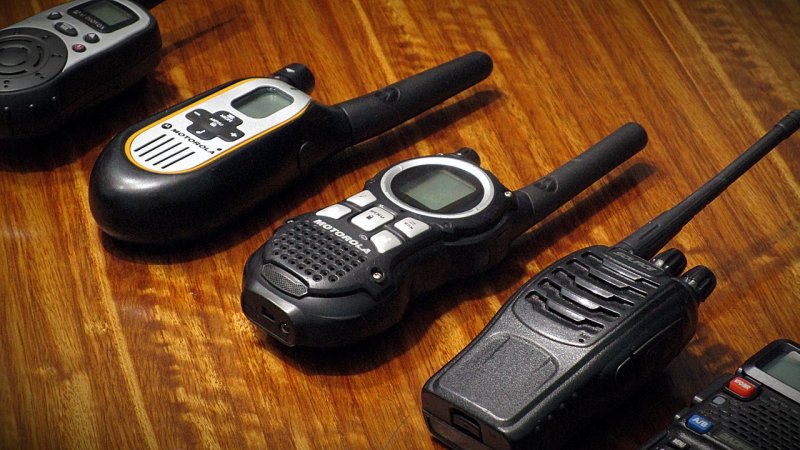
You can choose from the following options:
CB
The CB band is allocated for civilian use. The topic of CB stations and broadcasting on the CB band is well covered on numerous websites. So we’ll just touch on it briefly here, even though it’s probably the largest band in terms of range.
CB radio operates in the 27 MHz band, with a wavelength of 11 meters (CB stands for “Citizen Band”), across 80 channels. The maximum permitted power is 4 W. The modulation is frequency modulation (FM). For more information, see: https://www.ctu.cz/…_2005_22.pdf.
Originally, only the basic 40-channel band at frequencies from 26.965 to 27.405 MHz was permitted in our country. Today, we can use the expanded band of 80 channels in the range of 26.565 to 27.405 MHz. However, it’s also easy to find a radio with 200 (or 240) channels. These are typically divided into bands “A” through “E,” each with 40 channels; this applies, for example, to Allamat radios, as well as others. In that case, the legal bands are “B” and “C” (C is the basic band), and you are not allowed to have the other bands on your radio, let alone use them. On some radios (e.g., President), you can find the permitted frequencies under the letter “D,” as the “German standard.”
However, most radios only have channels 1 through 40, without a band selection indicated by a letter. These are the basic 40 channels of Band C, since Band B has only been permitted for the last few years. Even though there are 80 legal channels, some of them operate under a special mode with different rules.
Today, for example, they are used by truck drivers for communication on the road, by amateur radio operators, and by family members. The advantage is a large base of enthusiasts. Power output is 4W and more (for export versions). The main disadvantage is the size of the antennas. This is because a larger antenna generally has a greater range. However, small, inconspicuous magnetic CB antennas measuring about 30–65 cm are now available, which can be connected to excellent small handheld transceivers with 4W of power. So you get a 2-in-1 solution.
In our country, only frequency modulation (FM) is permitted, but some stations allow switching to the older amplitude modulation (AM), which is used, for example, in Poland.
Call channels—recommendations valid in Europe:
Channel 4 (AM) – as a call-out channel in AM modulation
Channel 9 (AM/FM) – as an emergency channel
Channel 19 (FM)—as an information channel for drivers
Channel 10 (FM)—as an information channel for drivers in the Czech Republic
Advantages:
CB radios are simply a classic and can be recommended to anyone who intends to use a radio to make social connections. So it’s kind of like Facebook on the airwaves! ;-) You’re never alone on the CB bands, so it’s like a land-based VHF marine band where you can call for help. Definitely best for use in a car if you want to communicate with other drivers, get traffic updates from passing truckers, or hear speed camera warnings from them.
Longer range—though this requires a large antenna mounted on the car’s roof (usually 1–2 meters).
Weaknesses:
Sometimes more interference on the band.
You cannot communicate with a boat’s built-in radio.
More expensive and larger than PMR.
Range in open terrain:
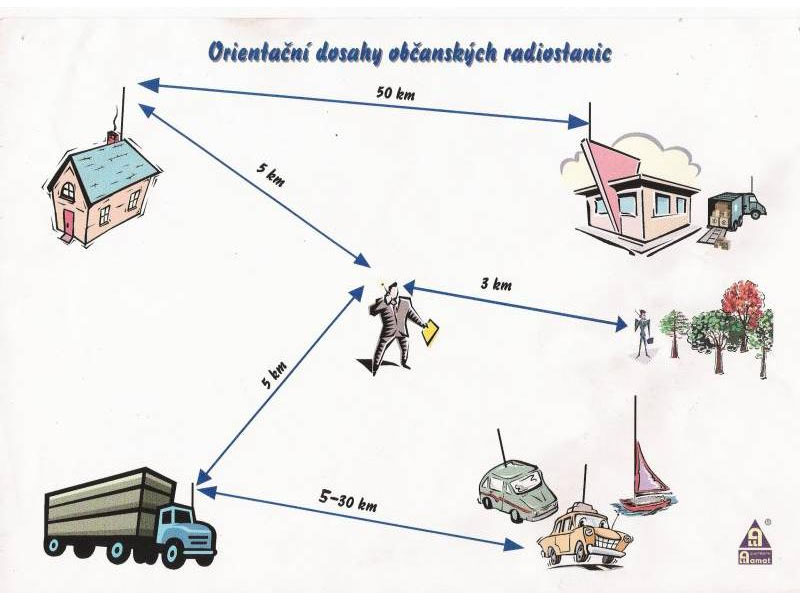
2–15 km, even further
with a large antenna. However, the range of CB radios depends on the circumstances. This image serves as a rough guide:
PMR / LPD
PMR radios are portable radios designed for operation in the 446 MHz public band. These include walkie-talkies—essentially most of the radios commonly sold in places like supermarkets—and are among the cheapest, but also the least powerful. Their features include clear, noise-free sound and advanced functions such as selective calling (which makes it seem like you’re the only one on the channel), voice activation (VOX), and call reception. Eight channels are reserved for communication. Compared to CB radios operating in the 27 MHz band (the ones you’ll find in trucks, for example), PMR radios operating in the 446 MHz band offer a shorter range but more reliable connections; thanks to their smaller size and lower power requirements, they’re well-suited for use in the field (as a substitute for a cell phone). The use of PMR radios is permitted under the Czech Telecommunications Office’s (ČTÚ) general license and the European license generally throughout the EU.
Advantages:
PMR radios are ideal for people who don’t want to delve too deeply into the technical aspects of radios! It’s the easiest way to use radios! They’re small, compact, inexpensive, and require very little power. They’re great for hiking, mountain trips, or even motorcycle and bike rides.
Disadvantages:
A drawback of PMR radios is the inability to choose a different antenna or connect an external one—due to their low power output, you’ll only be able to hear from your car as far as you can see, which is just a few hundred meters!!!
PMR radios transmit at 0.5W. The solution is an international version of the radio, which transmits at up to 4W, but it’s more expensive—about the same as a dual-band model. They also have the same weaknesses and advantages as UHF radios!!
They’d be good, but that range!! For a few hundred crowns more, you can get a dual-band radio with 5 and 4 W of power and enjoy the benefits of all bands—UHF, VHF, Marine, and PMR! The trade-off is more complex operation. If you want simple operation (so-called “foolproof” :-), long range, and a rugged design built to last, the best choice in this case is a professional PMR radio with 0.5–5W of power, where you can easily program the power output and switch between channels with different power levels simply by turning a dial.
Range in the field:
0.5–2 km, and even farther with line of sight
UHF
UHF (Ultra High Frequency) – 400–470 MHz. Use of these bands is reserved for amateur radio operators (members of the Czech Radio Club) and certain public organizations and private companies, such as the police, fire department, emergency medical services, taxi drivers, and security agencies. Other radio communication services (cell phones, Wi-Fi) also operate in this band.
However, even in the UHF band, you’ll find several shared frequencies designated for general use!
The UHF band also includes PMR (see above).
Advantages:
Choose the UHF option if you plan to use the radio in densely built-up areas (cities), inside buildings, and on construction sites, where there are a large number of various obstacles. UHF signals tend to penetrate wood, steel, and concrete more effectively and thus have better range in urban environments.
In addition, the UHF variant allows users to operate within a public radio network (via radio repeaters), for which the Czech Telecommunications Office (ČTÚ) has allocated these frequencies. If you are unsure about which option to use and want a single universal frequency—especially for indoor use in the Czech Republic—choose UHF. These devices transmit at a power of 1W–4W (10W).
Weaknesses:
Although UHF frequencies reflect well off obstacles, they “bend” less easily in open space! This means their range is strictly limited by terrain obstacles such as hills and the horizon.
If you want to transmit in the field, the UHF signal reflects off foliage rather than penetrating it, which means a shorter range compared to VHF.
Range in open terrain:
2–15 km.
UHF - 2,448.570 MHz 5W
UHF - 3 448.610 MHz 5W
UHF - 4 449.770 MHz 1W
UHF - 5 449.810 MHz 1W
VHF
Very High Frequency (VHF) – these are frequencies used by radios operating in the 130–174 MHz band. This is a wider band than that used by marine radios operating on maritime frequencies. Aircraft also use VHF frequencies to communicate with air traffic control. Handheld radios typically operate at power levels of 1 W–5 W (10 W).
Advantages:
Choose the VHF option if you plan to use the radio outdoors and in areas that are relatively free of obstacles, i.e., without dense development. VHF signals propagate better and farther through open space and thus tend to “cover” the ground more effectively. They provide better performance outdoors or in open terrain. You can also tune into marine channels on a VHF radio. You just need to have a basic understanding of two-way radios or simply save your favorite frequencies directly to the radio. VHF radios also have dedicated, shared frequencies allocated by the Czech Telecommunications Office (ČTÚ) in the Czech Republic. You’ll even find radio repeaters on VHF frequencies, allowing you to communicate over hills.
The main advantage is higher power than with PMR! Greater range, more robust radios, and—most importantly—the ability to connect an external antenna—which could easily be a 20-cm wire on a magnet that you simply place on your car’s roof to communicate up to 10 km away.
Range in open terrain:
2–15 km.
VHF - 1 172.650 MHz 5W
VHF - 2 172.725 MHz 1W
VHF - 3 172.950 MHz 5W
VHF - 4 172.975 MHz 5W
VHF - 5 173.050 MHz 1W
DUALBAND
Dual-band radios combine the UHF, VHF, MARINE, and PMR bands, allowing you to choose which band and power level to use in each situation.
Frequencies: VHF, UHF, PMR
Dual-band radios can be operated on shared channels under the Czech Telecommunications Office’s (ČTÚ) general authorization without additional permits.
PMR Frequencies and Shared Channels in the Czech Republic based on (GP-05-1994)
For more detailed information, see here or the ČTÚ website.
Advantages:
Transceivers in these bands typically have power outputs of 1 and 5 W for VHF and 1 and 4 W for UHF; they feature a detachable antenna to which an external antenna can be connected—such as a magnetic mount for a car roof—thereby significantly increasing range.
With dual-band capability, you can also use PMR channels for listening or shared UHF and VHF channels. This makes it a great solution for use in a car; if you purchase a magnetic mount, the range increases to several kilometers even in wooded terrain. Otherwise, simply increasing the power in a car doesn’t make much of a difference compared to PMR.
The real advantage is its great versatility. In addition to the CB band, it covers everything, so you can choose the band based on your needs—UHF for reinforced concrete buildings, VHF for the outdoors, or PMR as a legally compliant all-purpose option.
A dual-band radio can be just as small as the smallest PMR radio and costs only a few hundred CZK more. See here.
This is probably the most highly recommended option if you want radios not only for communication at sea, but also while traveling by car or during other activities in the Czech Republic. In other words, having one universal radio is all you need if you’re technically savvy.
List of shared channels for two-way radios
Frequency bands in use
Weaknesses:
They aren’t foolproof. If you entrust it to an inexperienced user and don’t lock the keypad, you won’t be able to get it to work anymore. :-)
These radios are intended for ham radio operators or technically savvy individuals who are capable of learning about two-way radios. They have a large number of settings that need to be configured before you can even start using them
The radios are often not even water-resistant, which can be a problem in bad weather.
Range in the field:
2–15 km.
HF
Shortwave (SW)
HF—short for High Frequency, also known as Short Wave (SW)—refers to radio waves with frequencies ranging from 3 to 30 MHz. It is used for medium- and long-distance radio communications, shortwave radio broadcasting, and amateur radio bands. HF waves do not bend significantly beyond the horizon. However, they are reflected by the upper layers of the atmosphere (the ionosphere). This phenomenon is called refraction. By carefully selecting the frequency—which depends on the time of day (or night)—it is possible to achieve the appropriate reflection and thus transmit over very long (global) distances. This phenomenon is primarily utilized by amateur radio operators.
In maritime transport, these stations are used during ocean voyages. A ship should therefore be equipped not only with a VHF station, which is used for communication in coastal navigation (up to 30 NM), but also with an HF station, which, although more susceptible to interference, has a reported range of around 200 NM for smaller vessels.
Aviation
Aviation radios must not only be capable of transmitting within a specific band (118.000–136.975 MHz) but also have the appropriate channel spacing of 8.33 kHz for the aeronautical communication service. All aircraft put into service after November 17, 2013, will have to be equipped with the new radios. The complete transition should be completed by the end of 2017.
Surveillance receivers—scanners
Surveillance receivers are used solely for receiving transmissions. Therefore, they cannot be used to transmit. They operate across a wide frequency spectrum, including, for example, all the bands listed on this page. Owning such a receiver allows you not only to listen to the communications of airplanes, ships, or trucks, but also to pick up weather service reports over the ocean, etc.
How to Choose a Receiver for Radio Monitoring?
Marine
Marine radios, also known as shipboard radios, are VHF radios designed for maritime, coastal, and river communication on international maritime channels in the 156–162 MHz band.
They generally offer the advantages of VHF radios, namely partial “bending” of waves and good penetration through vegetation. They are adapted to maritime conditions—usually water-resistant, waterproof, or even buoyant—and feature direct access to Channel 16 (CH16) for communication and safety. Power output is 5 W, with an optional 1 W setting.
These radios are approved for both inland waterway and maritime use. Choose them if you’re heading out to sea. They’ll allow you to communicate even with built-in transmitters directly on ships that use a mast-mounted antenna, enabling communication over longer distances.
Some of them are also equipped with the ATIS function—a code that identifies the sender (most often a vessel) with each transmission. The code is typically assigned by the authority (ČTÚ) and is mandatory for certain vessels or stations.
Advantages:
These radios are designed for use on boats, at sea, and on rivers. Manufacturers usually take into account the harsh weather conditions that prevail in these environments. They are mostly waterproof and durable.
On the keypad, you’ll find a large CH16 button, which provides direct and quick access to the international maritime communication and emergency channel. If something happens and you need help, just press this button and everyone at sea will hear you!
So they offer the advantages of PMR radios—such as ease of use even for those holding a radio for the first time in their lives and who aren’t interested in selective frequency selection or noise gate tuning. These radios, while they may be sophisticated, are designed for use in emergencies, distress, and urgent situations! So just press the channel button and transmit!
Another advantage is that you’ll always need one fewer station than with other frequencies. You’ll connect with the ship’s built-in station over a long distance, since its antenna is mounted high on the mast (see the graph below).
This station also offers all the benefits of VHF signal propagation! That includes diffraction—the bending of waves—which means you can make contact even just beyond the horizon.
Even if you’re traveling by yacht, all you need to do is buy an external antenna with a magnet for a few hundred crowns, mount it on your car’s roof, and you’ll be heard for many kilometers. In the wooded area along the D1 highway, the range will be 12–15 km, because you’ll be using the entire metal surface of the car as an antenna. With PMR radios, you can only dream of that!
If you’re heading out to sea, be sure to choose MARINE maritime radios! You’ll even hear regular weather reports.
Marine radios are very easy to use.
Weaknesses:
VHF signals don’t travel well through buildings made of wood, steel, or concrete. So in historic coastal towns, they’ll perform just as well as PMR or UHF, but in Manhattan—not so great! :-)
MARINE stations only cover part of the VHF spectrum. You probably won’t be able to use many repeaters in the Czech Republic with them. This is an internationally used maritime frequency. So you can easily listen to regular weather reports for boats on the Elbe River, but in general, there may be heavier traffic on these channels, especially at sea.
If another friend buys a radio at a big-box store, it’ll be a PMR, not a Marine radio!
A more versatile—and often cheaper—solution is a DUALBAND radio, which can actually be less expensive. However, it isn’t as simple or waterproof.
Range
The range of the radio depends on its use. In the field, it will be 2–15 km.
In open areas—especially at sea—range depends on the antenna’s height above the water’s surface. It is therefore not determined by the radio’s power; the power helps at most to eliminate interference. Thus, the difference in range between a built-in marine radio and a handheld marine radio is primarily due to antenna placement; on sailboats, the antenna is located at the highest point of the mast and therefore has a longer line of sight than you do on deck.
More precisely: The distance to the VHF antenna’s horizon (in nautical miles) is approximately three times the square root of its height in meters.
(1 NM = 1,852 m = 1.852 km (exactly))
